

The Ministry of Health, in collaboration with the Ethiopian Academy of Sciences, convened the first National Evidence-Informed Decision-Making (EIDM) Health Summit 2026. The landmark event was held under the central theme, “From Evidence to Action: Building an Evidence-Driven Health System.”
In her opening address, the Minister of Health, H.E. Dr. Mekdes Daba, underscored the critical imperative of anchoring health sector policies and operational choices in robust, empirical data. She emphasized that in an era increasingly challenged by the proliferation of misinformation, grounding strategic initiatives in verified, accurate and up to date data remains paramount to ensuring public health efficacy.

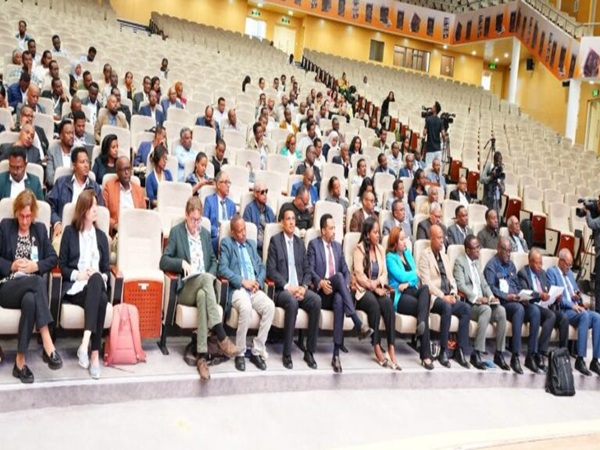
In her welcome address, Professor Aster Tsegaye, the Policy, Strategy and Research Lead Executive Officer of the Federal Ministry of Health stated that the Summit was aimed at bringing together policymakers, researchers, health professionals, academic institutions, development partners, civil society representatives, and key sectoral stakeholders in view of strengthening the use of evidence in health policy, planning, and implementation.

At the opening plenary, representatives of key international and continental bodies underscored their collective resolve to anchor health solutions in robust scientific proof. In particular, the World Health Organization (WHO) Representative to Ethiopia, the African Union (AU), and the United Nations Economic Commission for Africa (UNECA , as well as the Deputy Director of Africa CDC delivered deeply informative speeches that directly tied the Summit’s core theme to their broader global mandates.

The speakers emphasized that implementing Evidence-Informed Decision-Making (EIDM) is not just a strategic choice but a fundamental prerequisite for building resilient, adaptive learning health systems. Such systems, they noted, are vital for navigating emerging global health emergencies and safeguarding public health equity.
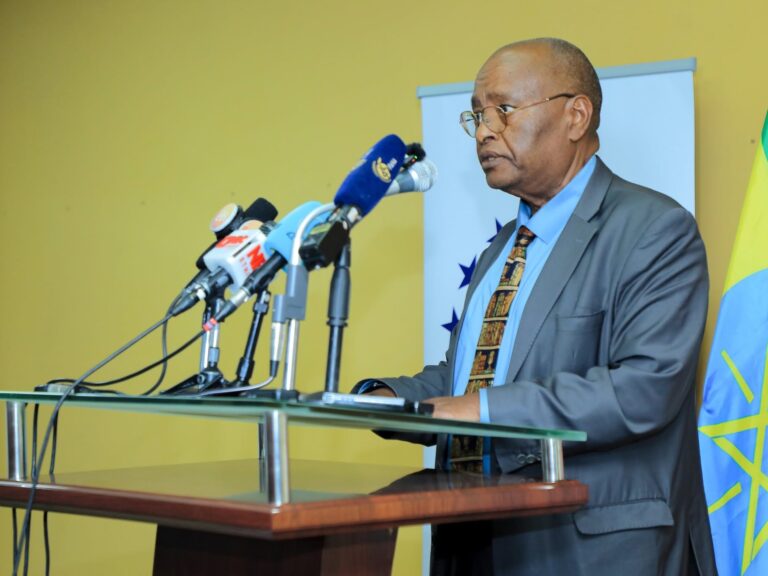
Professor Belay Kassa, President of the Ethiopian Academy of Sciences (EAS), delivered a keynote address stating that an effective learning health system demands a corresponding “learning scientific ecosystem” that remains fiercely credible, independent, and responsive to immediate policy needs. Professor Belay reminded the audience that scientific research fails to fulfill its ultimate public purpose if it merely ends up published in academic journals; rather, its true value is realized only when it actively improves leadership decisions, protects underserved communities, and reduces system-wide disparities.

Professor Belay further explained that robust evidence provided leaders with the clarity, humility, and accountability required to navigate highly complex, high-stakes policy options. Invoking the historic backdrop of the Adwa Victory Memorial, he noted that just as national sovereignty is forged through unity and discipline, true “evidence sovereignty” required a collective national courage to define domestic questions, govern localized data wisely, and ultimately contribute uniquely Ethiopian knowledge to Africa and the wider world.
Throughout the Summit, numerous researchers presented empirical studies and led panel discussions that fostered rigorous thematic debates. The event concluded with a collective commitment to translate the summit’s core recommendations into actionable strategies, thereby accelerating the development of a resilient, data-driven healthcare architecture.