The Ethiopian Academy of Sciences (EAS), in partnership with the U.S. Embassy in Addis Ababa and has launched a five-day training workshop, Phase II on “the Ethiopian Public Universities Autonomy 2.0 Policy Documents Review”. The program, held at the Hilton Hotel from January 12-16, 2026, is part of the broader collaborative initiative titled “Supporting the Transition of Ethiopia’s Public Universities to Autonomous Governance.”
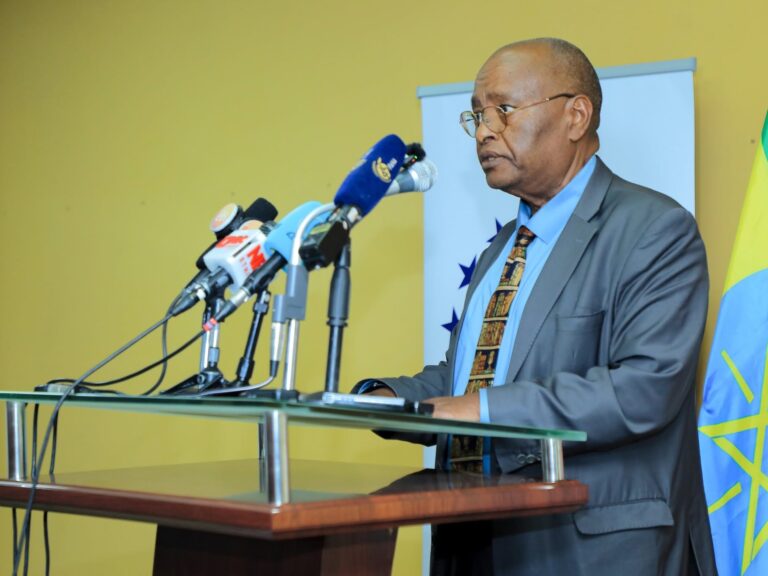
In his opening speech, Prof. Belay Kassa, President of the EAS, emphasized that the Autonomy 2.0 Policy Documents Review Workshop marks a critical milestone in Ethiopia’s higher education reform journey. He noted that Phase II builds directly on the progress achieved in Phase I, moving from strategic planning and senate legislative alignment to real institutional autonomy. By focusing on student admission, alumni engagement, resource mobilization, and endowment, the workshop targets core systems that determine universities’ long-term effectiveness, accountability, and sustainability.

He further highlighted the role of collaboration and shared ownership in ensuring meaningful reform outcomes. Prof. Belay underscored EAS’s commitment to serving as a long-term technical and strategic partner to public universities, stressing that autonomy is not a one-time reform but an ongoing process that requires coherence, feasibility, and alignment with national priorities.
Dr. Jonathan Koehler, the Public Diplomacy Officer at the U.S. Embassy, emphasized that the Autonomy 2.0 initiative represents a strategic shift from policy intent to practical implementation. He underscored that institutional autonomy is not an abstract reform, but a functional tool that enables universities to respond more effectively to national development priorities, student needs, and global academic standards. He highlighted that strong governance frameworks, clear policies, and capable leadership are essential for autonomy to translate into measurable performance and public value.

He also reaffirmed the U.S. Embassy’s commitment to long-term partnership with Ethiopia’s higher education sector. Dr. Koehler noted that the Embassy’s engagement is grounded in collaboration, mutual learning, and institutional strengthening rather than short-term interventions. He encouraged participants to use the workshop as a space for honest reflection, shared problem-solving, and collective ownership, stressing that sustainable reform depends on universities’ ability to operationalize these policies within their own contexts.
Activities planned for yesterday and today have been completed, including the expert observations, plenary discussions, and in-depth policy reviews on Student Admission and the initial Alumni Engagement frameworks across participating public universities. These sessions have enabled peer learning, cross-institutional comparison, and targeted expert feedback aligned with Ethiopia’s higher education reform agenda.
The workshop will continue over the remaining days with the completion of Alumni Engagement, followed by focused reviews on Resource Mobilization and Endowment policies, concluding with a plenary reflection on next steps. The process remains anchored in strengthening institutional autonomy, financial sustainability, and accountable governance across Ethiopia’s public university system.